
DDA '26 · Panel Recap · Health & Wellbeing
Health Beyond Medicine
Are You Healthy, or Just “Not Sick”?
What does health mean to you? — The room responded live
Live audience responses · Health Beyond Medicine · DDA '26 · Houston, June 2026
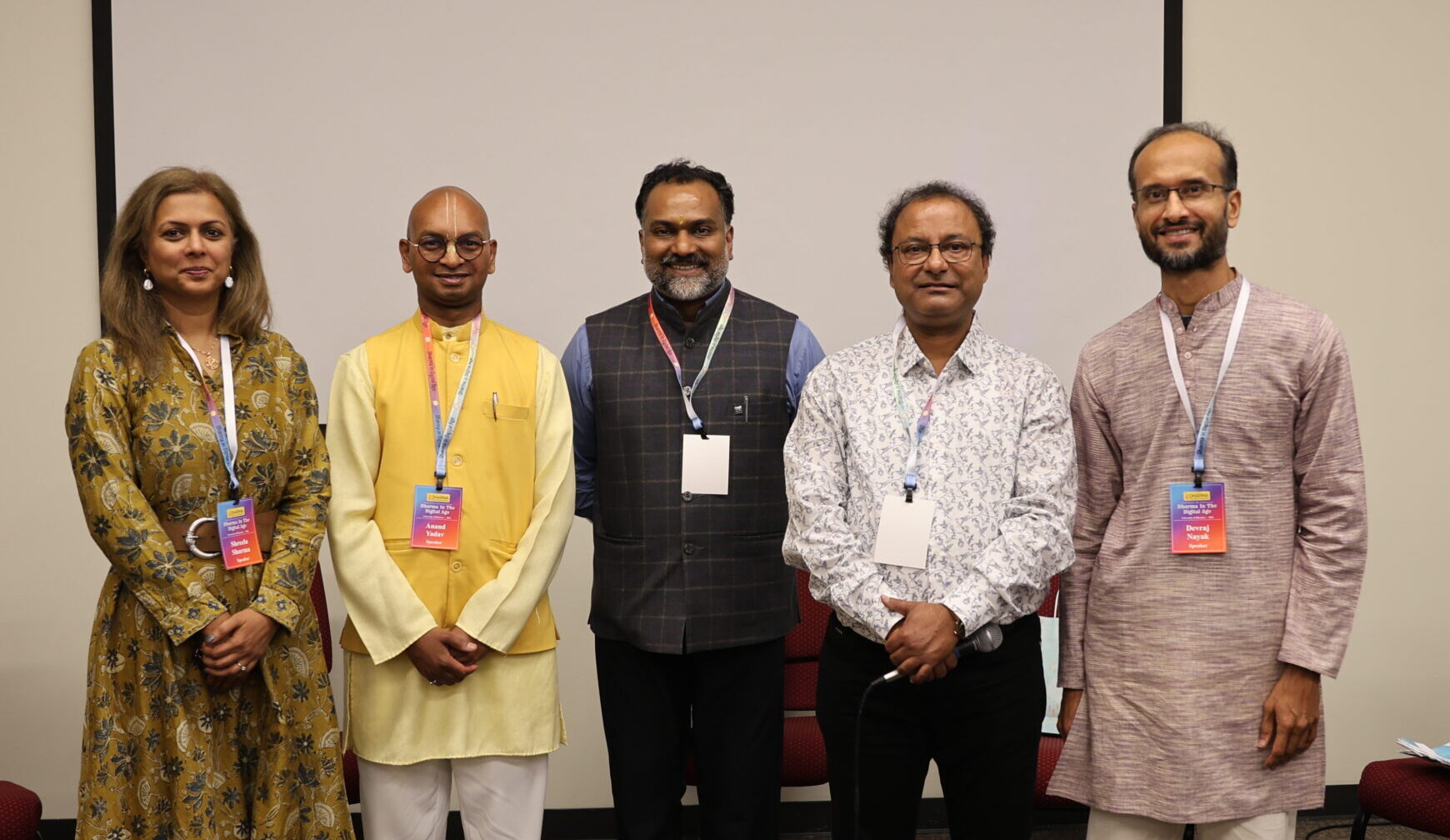
Health Beyond Medicine Panel · DDA '26 · University of Houston · June 2026
The moderator, Sonal Gupta, opened with a challenge as simple as it was radical: “If you leave this session convinced that you can be healthy without medicines, we are successful.” It was not a call to reject doctors. It was an invitation to recognise something our traditions have always known and our daily lives have quietly forgotten: health is not a destination you purchase, track, or outsource. It is your body’s natural state.
What followed was two hours of honest, sometimes funny, occasionally uncomfortable conversation between an epidemiologist, an Ayurvedic physician, a cardiologist, and a health economist — four practitioners who rarely share a stage, but who converged on a single diagnosis: we are treating the symptoms of a system that has taught us to distrust our own bodies.
The invitation that opened the session
“Health is not a destination you purchase, track, or outsource. It is your body’s natural state.”
This was not a call to reject doctors or dismiss modern medicine. It was an invitation to recognise something our traditions have always known and our daily lives have quietly forgotten. Nobody in the room disagreed. And yet — as the polls that followed would show — almost nobody was living it.
Who Was in the Room
The Panel
Nutritional epidemiologist and public health researcher at UTHealth Houston. Works on sustainable solutions to food insecurity and diet quality at the population level.
Founder, Hemlata Ayurveda Ancient Healing, Houston. Practitioner of classical Ayurvedic medicine from a traditional Vyas family lineage.
Cardiologist and striving spiritual aspirant exploring the frontier between cardiac care, yoga, and inner wellbeing.
Globally recognised Health Economist and Prevention Scientist based in Sweden. Expert in health systems, prevention, and policy advocacy.
Health and wellness expert facilitating conversations at the intersection of modern medicine and traditional healing.
Perspective One
Where You Live Matters as Much as How You Live — Shreela Sharma
Sharma opened with a question to the room: “How many of you eat?” Everyone raised their hand. “So food is fundamental to life,” she said. “We need to eat to live, but we also need to eat well to live well.”
She then delivered a number that landed hard: there is a 22-year gap in life expectancy between the Sunnyside and River Oaks neighbourhoods of Houston — two areas separated by a short drive. That gap is not explained by genetics or individual choices. It is explained entirely by the social and physical environment people live in. This, she argued, is what health systems almost never address.
The food system
The US grows 80 billion pounds of fruits and vegetables that are left to die on farms every year, while 50 million Americans are hungry. Crop rotation is largely absent, which means the apple you eat today is less nutrient-dense than the apple you ate ten years ago. We grow a lot. We waste a lot. And the people who need it most do not get it.
On ultra-processed food, she was unambiguous: chips, cookies, and packaged snacks are not food. They are food-like substances engineered by scientists using the same addiction techniques developed by the tobacco industry. Philip Morris was directly involved in developing snack food formulations designed to trigger dopamine responses. “There is no safe amount of ultraprocessed food,” she said. “Not one chip, not one cookie.”
On the health system itself: 99% of actual health happens outside the clinic walls, yet physicians are not trained in nutrition. Sharma is working to change this at McGovern Medical School and Baylor College of Medicine through culinary medicine training. And she noted the structural absurdity: prevention is not covered by health insurance. Going to a gym is not covered. A dietitian session is covered for 15 minutes, four times a year. That is all.
Food is Medicine — a movement gaining ground
22 US states are now reimbursing for “food is medicine” programmes — where alongside a prescription for metformin for Type 2 diabetes, a patient also receives a prescription for healthy food, redeemable at a food pharmacy. The system is beginning, slowly, to recognise what Ayurveda has always said: food is the first medicine.
Her closing point was perhaps the most surprising: service to others is one of the most documented drivers of personal health and longevity. Harvard studies spanning decades confirm it. What happens in Sunnyside — whether you have ever been there or not — affects your own health outcomes. We are not isolated units making individual choices. We are embedded in a social fabric, and that fabric’s health is our health.
Perspective Two
Eat with Your Eyes First — Anand Yadav
Yadav began with the Ayurvedic definition of health — Swastha: when the dhatus (tissues) are in proper order, when elimination is natural, when agni (digestive fire) is functioning well, and — crucially — when the prasanna atma indriya mana (the soul, the senses, and the mind) are in harmony. Only when all three are aligned is a person truly established in themselves.
He named the three pillars Ayurveda calls the upastamba of life: Ahara (food), Nidra — which he was careful to say Ayurveda calls swapna, dream, not just sleep, because the quality of what happens in the mind during rest matters — and Brahmacharya, a regulated lifestyle. He was equally careful on Brahmacharya: it does not mean celibacy for everyone. There are two types: Naishtika brahmacharya (lifelong celibacy) and Grihastha brahmacharya — the regulated, balanced life of a householder. Most of us in the room, he said, are the second.
The discovery that changed how he sees food
Yadav had long puzzled over a striking fact: Sushruta, the ancient Ayurvedic surgeon, devoted 21 chapters out of 66 in his entire text to the eyes. Why? Searching for years, he finally found a clue in a remote Japanese shrine — where a priest told him: “When we eat, what do we do? We see first.” He returned to Sushruta and found it: two pages explicitly recommending that food be placed before your eyes for at least one minute before eating. “First you eat through your eyes, then you smell, then you start.” Yadav tried it himself for three days. He said the difference was unmistakeable.
He also cited a University of Shanghai study on eating with fingers: tactile contact between fingertips and food stimulates nerve cells that send signals to the brain, priming better digestion. It is not ritual. It is neuroscience that Ayurveda encoded centuries ago.
On the causes of disease, Yadav introduced two Ayurvedic concepts that the panel returned to throughout the session: Prajnaparadha (blasphemy against one’s own intelligence — acting against what your inner wisdom is telling you) and Asatmya-indriyartha-samyoga (unwholesome conjunction of senses with their objects — using the senses too much, too little, or in the wrong way). These, he said, are not abstract concepts. They describe what most of us do every day from the moment we wake up.
His answer on “bad food”: “There is no bad food and good food. It is about the right time, the right person, the right constitution.” Bhaji (fried food) is good when it is raining. Eating after sunset, however, is something no non-nocturnal animal does. All of nature follows that rhythm. We are the only ones who pretend we are exempt.
Perspective Three
Medicine Starts at the Numbers. The Problem Starts Much Earlier — Devraj Nayak
Nayak started with the word itself. In the word “dis-ease,” there is ease. Health is not something you seek. It is what remains when you remove the layers. His definition: “Health is the state you arrive at by deleting, not by seeking — dropping the baggage of past lifetimes that keeps us caught in the dualities of pleasure, pain, and fear.”
As a cardiologist, he traced the causal chain of heart disease backwards from where medicine typically enters it. Heart attacks happen because of blockages. Blockages happen because of risk factors — obesity, sleep apnea, high blood pressure, cholesterol. What causes those abnormal numbers? Years of accumulated habits, choices, and samskaras. And what causes the samskaras? “Modern medicine stops at the numbers,” he said. “It never goes one level lower. And that level lower is where yoga begins.”
The instrument nobody is training
Nayak asked the room a direct question: “What is that instrument inside us that makes our choices? Can I train it? This is what modern medicine is missing.” Eating protocol, breathing protocol, moving protocol, sleeping protocol, thinking protocol — all of these are described in yoga traditions in detail. But behind all of them is a decision-making faculty — the chitta — that no medical curriculum currently addresses.
On sleep, he was precise: the window between 10 PM and 2 AM is the golden window for deep sleep. The pineal gland is connected to the sun; circadian biology is not optional. If you want deep sleep by 10 PM, you need to be in bed by 9. Which means dinner must be done by 6. “You see how things have to work out,” he said. “The whole day organises itself around that one principle.”
He also offered a specific sleep practice: before drifting off, reflect on the day without self-judgement — where did I lose my emotions, where did I deviate from my practice? Then wake at Brahma muhurta and begin the day with an affirmation about one value you will embody. “Sleep becomes a powerful spiritual practice in our evolutionary growth, not just a time to recharge.”
His most arresting data point: average human attention span in 2000 was 15 seconds. By 2015 it had dropped to 8.5 seconds — below the average attention span of a goldfish (9.2 seconds). ADHD went from 1 in 250,000 children to 11%. “We are not just diagnosing more,” he said. “We are not acknowledging that the prevalence itself is rising.” The chitta, trained lifelong to keep jumping, carries that habit. It does not reset when we close our eyes at night.
Perspective Four
The Farmer Knows. The Slum Knows. Why Don’t We? — Koustuv Dalal
Dalal named his single most important factor in long-term health without hesitation: spiritual health. And then he made an observation that silenced the room: “We Indians are inherently living for others. We say ‘I am good’ only when others approve. That is a big problem. In healthy societies, people live for themselves — with integrity, not selfishness. We have confused the two.”
He spoke about learning tongue diagnosis from tribal communities in India — and learning that if you feel slight moisture on your lip when standing outside, rain is coming. “They are so much inside nature,” he said. “That is what we call the original Indians. Not aboriginal. Original. We should be learning from them, not the other way around.”
Two studies that tell the same story
During COVID, Dalal studied a high-income neighbourhood in Stockholm and a lower-income, heavily immigrant area of Malmö. In Malmö, some families were taking five to seven different antibiotics three to four times a week — sent by relatives from home countries who were bypassing customs. In the wealthy Stockholm neighbourhood, the response was radically different: husband and wife were not meeting, using separate kitchens, coordinating by SMS, opening windows for fresh air. The behavioural gap was entirely driven by health literacy, not income.
And then there was Mumbai: not a single death during the pandemic in the city’s densest slum areas — while the highest death rates were in the most expensive high-rises. “There comes the spiritual health,” he said. “The karma.”
His sleep recommendation was behavioural: before bed, quiet the envy, the jealousy, the comparisons. Pray that you are grateful to be alive. Pray to wake up with consciousness tomorrow. He practices this while travelling across continents. “Even if I sleep three to four hours, I wake up fresh, because I was sleeping happily. That is my mantra.”
His parting advice on health investment: “Health is the only commodity you can both invest in and consume. You cannot do that with any other commodity.” Don’t promise yourself you will start tomorrow. Move one inch today. One day you will arrive at twelve inches.
What the Room Brought
Moments from the Audience
On trusting health information
The poll was the clearest of the day: 20 people said they do not know what trustworthy health information looks like. 10 said they are confused by constantly changing guidelines. Only 6 said they trust what they read.
The panel’s response: the sugar lobby funded educational institutions in the 1980s to specifically blame fat for heart disease. Coconut oil was declared dangerous until the 2000s — then rehabilitated. Cardiologists recommended red wine based on a 2002 study — funded by the French wine industry. The beer industry promptly funded a study showing beer has the same benefits. Japan’s longevity, one panelist suggested, is partly explained by a cultural practice of only accepting scientific information once translated and authenticated by senior professors for local context. “We Indians jump from one information bag to another without knowing what is inside,” said Dalal.
On protein powders and supplements
The protein question came up multiple times. The consensus was consistent: no one living in America has a protein deficiency. Plant proteins — lentils, beans, leafy vegetables — contain all the amino acids your body needs to make its own proteins. An elephant, a horse, a hippopotamus, a rhinoceros are all vegetarian. “They do not seem to have a protein problem,” observed one panelist. The Impossible Burger and similar products were flagged as ultraprocessed, not real food, despite being plant-derived. High-protein diets were noted to adversely affect gut microbiome — the opposite of what prebiotic-rich plant foods do.
A pledge from the panel
A participant named Arun raised an important challenge: there was too much information to absorb and no clear pathway for communities to access good health content or debunk bad information across age groups. The panel agreed collectively to write a white paper bringing together the evidence and frameworks discussed — without any conflict of interest — as a contribution to that gap. They also invited anyone interested in the intersection of technology and health education to come forward as a collaborator.
The Ayurvedic Framework
The Three Pillars of Health
Ayurveda’s upastamba — the three foundational pillars — ran as a thread through almost every answer the panel gave. They are not three separate practices. They are three legs of the same structure. Remove any one and it collapses.
Ahara — Food
Nidra — Sleep
Brahmacharya — Regulated Life
What You Can Do
Five Practices to Begin
These are not from a wellness app. They emerged directly from what panelists said they actually do themselves.
Eat with Your Eyes for One Minute
Before every meal, put down your phone and look at your food with full attention for at least one minute. This is not a ritual — it is physiology. Sushruta documented it; neuroscience confirms it. The visual and olfactory engagement primes your agni (digestive fire) before the first bite. Then smell. Then eat. If you are at home, use your fingers.
Protect the 10 PM–2 AM Window
The pineal gland is connected to the sun. This is circadian biology, not lifestyle advice. Finish dinner by 6 PM. Begin winding down by 9 PM. Be in bed by 10. Before sleep, reflect on the day — not to judge yourself, but to notice where you deviated from your own values. Set one intention for tomorrow. This is what several panelists said they personally practise — and what keeps Dalal sleeping well across time zones.
Judge Sleep by How You Feel, Not What a Device Says
The signs the panel named: morning freshness, natural urge to evacuate, concentration, enthusiasm, and a sense of satisfaction on waking. The audience member who said they judge their sleep by their Oura ring score prompted a pointed response: “What you cannot measure, you cannot fix” — but the inverse is also true: what a device measures may not be what matters. Trust the organic outcomes first.
Exercise to Half-Capacity
Ayurveda’s recommendation is called ardhashakti — perspiration arrives at your forehead, nose, or armpit, and you feel that you have roughly half your energy remaining. Stop there. The goal is not exhaustion or performance maximisation. It is sustainable vitality throughout the day. The panel’s language for modern gym culture was gentle but clear: we have replaced movement with performance anxiety.
Practise the Conscious Pause Before You Scroll
The session closed with a 6-second-inhale / pause / 6-second-exhale breathing exercise that Nayak called “coherent breathing” — activating the vagus nerve, lowering blood pressure, and creating distance between stimulus and response. Apply this before opening a news app, before replying to an agitating message, before clicking a recommended video. The 8.5-second average attention span is not a character flaw. It is a trained behaviour. It can be un-trained.
“If medicines disappeared tomorrow, what factors would most strongly determine whether you remain healthy? Think about that. We’ll see if you have the answers by the end of the session.” — Sonal Gupta, opening the session
By the end, the room did have answers. Not prescriptions. Not scores. Not supplement stacks. The answers were simpler and older than all of those: sleep with intention, eat with your senses, move with moderation, quiet the mind before you rest, and remember that your body already knows what it needs. It always has.
Watch the Full Session
The complete panel recording is available — including the live word cloud, audience polls, the protein debate, the 30-second movement break, and the coherent breathing practice that closed the session.
Watch Now →